


British woman spends 20 days in labor before giving birth prematurely
June 4, 2010 by Shawn Douglas
Filed under News
 A British woman spent 20 days last year exhibiting signs of being in labor before giving birth prematurely to her baby son.
Amy Buck began her long ordeal last year on May 4 when she went to Royal Lancaster Infirmary complaining of stomach pains.
“I was getting a lot of hot flushes, was very, very tired and short of breath,” Buck told the Telegraph. “I had cramps and contractions all the time and they got worse and worse.”
Buck was told that it was normal pain from the womb and sent her home. But her condition continued to worsen.
“It got progressively worse,” she said. “When the doctors sent me home, after that it began to get unbearable. Mum said just take some painkillers.”
Unable to cope with the pain, Buck returned to the hospital 15 days later. “I went into hospital again and they said ‘you’re in full labor.’ Because I’d been open for 15 days I had contracted an infection. It was risky for me as well.”
”Then they said they were going to have to break my waters because my infection was putting Daniel at risk,” she added. “Then my waters broke on their own as soon as my bum touched the bed. They said, ‘You’re going to give birth today.’”
On May 24, twenty days after her first visit, Buck gave birth to baby Daniel nearly five months prematurely, weighing only 1 pound, 3 ounces. The boy was only given a 15 percent chance of living. Daniel faced a host of problems including lung problems and laser eye treatments.
“I thought he wasn’t going to survive but later he started getting better,” said Buck. Now Daniel, who celebrated his first birthday last week, weighs a healthy 17 pounds. “’Looking at him now, I realize he he’s little miracle and a little fighter,” she added.


 If you're new here, you may want to subscribe to Baby Chums RSS feed.
Thanks for dropping by and enjoy!
Tribunal: Female RAF officer discriminated against for pregnancy
June 4, 2010 by Shawn Douglas
Filed under News
 A military tribunal has found that a female Royal Air Force officer was discriminated against for being 12 weeks pregnant.
The officer, who wishes to remain anonymous, claimed that she was treated unfairly when she told her superiors that she was 12 weeks pregnant.
The tribunal heard that she had been removed from her post on the Falkland Islands and ordered to return to the U.K. despite the fact that her husband, also an RAF officer, was also serving on the island. Not only was she not able to be with her husband for the pregnancy, her removal also delayed an important performance review which set her promotion prospects back.
Yesterday the tribunal rejected the process, awarding the officer 16,000 pounds. The Equality & Human Rights Commission, which funded the officer’s case, said that the treatment issued by her superiors “had the effect of creating an intimidating, degrading, hostile or offensive environment for her.”
The tribunal also recommended that the Ministry of Defence review its policies of handling pregnant women in the military.
John Wadham, group director of legal affairs at the Equality & Human Rights Commission, told the Telegraph: “The Commission’s research has shown that pregnant women are the most discriminated group of people in the workforce, with 30,000 losing their jobs each year as a result of their pregnancy. Larger employers such as the Ministry of Defence should be leading the way in showing other organizations how to treat their pregnant workers.”
Two weeks ago Baby Chums wrote about the Ministry of Defence’s campaign to encourage military personnel to take extra precautions regarding sex. That story mentioned the Army’s policy of immediately sending home women who declare they’re pregnant. It’s unknown if this tribunal decision will inevitably alter the military’s stance on pregnant women.
Does too much weight gain during pregnancy put child at risk?
June 3, 2010 by Shawn Douglas
Filed under News, Pregnancy
 A team of researchers has linked too much weight gain during pregnancy with cardiovascular disease risk factors in children later in life.
New research finding out of the University of Bristol suggest that women who are pregnant control their weight gain for the benefit of their future children.
The researchers looked at data on 5,154 mother and child pairs, collected during the Avon Longitudinal Study of Parents and Children in 1991 and 1992. During that study 14,541 pregnant women were followed. However the Bristol researchers found that nearly a third of the participants had the specific data they needed.
Mothers were weighed before the pregnancy and at regular intervals during the pregnancy. Additional weight and BMI information was examined for all the children at the age of nine. The team also examined the blood cholesterol data, which was available for 3,457 of the children.
The team wasn’t surprised to find that women who were overweight before becoming pregnant yielded overweight children. They did find it curious that regardless of pre-pregnancy weight, weight gain during pregnancy seemed to have an impact on a child’s risk of having high body fat, high blood pressure, and low levels of good HDL cholesterol.
The team suggested that fat mass plays a key role in determining weight and cardiovascular outcomes in children, but the team was hesitant to suggest this was the only factor. The researchers suggested that long- and short-term risk factors in mother and children need to be more closely analyzed before suggesting that women control their weight.
Additionally, the National Health Service of the UK issued a statement with other cautions.
“[O]ther important lifestyle factors, such as diet and activity levels in both the mother and child, were not considered,” the NHS analysis said. “This makes it difficult to say that the mother’s weight gain during pregnancy affects the child’s body fat rather than the lifestyle habits common to both. Also, mother and child are genetically linked, and shared genetic factors could affect their tendency for weight gain.”
The study was published in the June issue of the journal Circulation.
Baby giant anteater born, first in UK this year
June 2, 2010 by Shawn Douglas
Filed under News
 A rare baby giant anteater was born at the Amazon World Zoo Park, the first of its kind in the UK this year.
Staff at the Amazon World Zoo Park are delighted about a new addition to the family — a baby giant anteater.
A team of veterinarians monitored mother Kliene for several weeks, anticipating the event. The BBC broke the news today that the healthy 1.5 kilogram (3.3 pound) baby had been born.
“We are very happy that both mum and baby are doing very well,” Rachel Patrick, head zoo keeper at Amazon World, told the BBC.
Mother Kliene and father Ernst originated in Germany and are part of a long-term international breeding program. Across Europe there are 104 giant anteaters in captivity, with five of them having already birthed this year.
Giant anteaters are currently categorized as “vulnerable” by the International Union for Conservation of Nature and Natural Resources. This classification means that experts predict a 20 percent reduction in the number of giant anteaters in the next 10 years. There are estimated to be as few as 5,000 of the animals currently in the wild and roughly 90 to 100 animals in zoos in the U.S.
Two weeks ago it was reported that the Roger Williams Park Zoo in the U.S. state of Rhode Island lost one of its giant anteaters to digestive complications two months after giving birth. The 8-year-old giant Talara was found to have intestinal blockage and lesions in the uterus and stomach. While normal for mothers to have a reduced diet after giving birth, zoo officials became concerned when Talara failed to return to normal eating behavior.
Zoo officials have been caring for the baby in the veterinarian hospital and offered an optimistic outlook for its future.
Women in north Italy to be paid ‘a fee’ for not aborting a pregnancy
June 2, 2010 by Shawn Douglas
Filed under News
 Pregnant women in north Italy who are economically burdened will be offered up to 4,500 euros to not abort their pregnancy.
Roberto Formigoni, regional president of Lombardy in north Italy, announced a scheme to help dissuade women in poor economic circumstances from aborting their pregnancy.
“No women need to abort now in Lombardy for financial reasons,” said Formigoni during the announcement of the scheme. “We want to help families, maternity and birth, removing any possible obstacles — starting with economic problems — which make it difficult to choose in favor of life.”
Formigoni revealed that up to 4,500 euros (3,700 pounds; 5,500 dollars) would be given to qualifying women in the region. Pregnant women who apply would be required to show they suffer “economic difficulty,” making less than 23,000 euros annually with other children to support. Eligible women would receive 250 euro payments for 18 months.
Critics, however, claimed that the payments would quickly exhaust the 5-million-euro Nasko Fund set aside by the government. The Daily Mail quoted a critic as saying: “If all pregnant women in Lombardy with financial difficulties decide to keep their children their babies, the money will run out in three months.”
Formigoni, a Roman Catholic, has a record of fighting against abortion, which has been legal in Italy since 1978. He disagreed with the practice of hospitals dispensing the RU486 pill, claiming that it conflicted with the country’s abortion law. In 2008, he worked to limit abortions to no more than 22 weeks and three days.
Britain’s oldest father of twins set for another baby at 72
June 1, 2010 by Shawn Douglas
Filed under News
 Britain’s oldest father of twins is at it again, this time helping to conceive his thirteenth child at the age of 72.
Last November Baby Chums reported that Richard Roden had become Britain’s oldest father of twins at the age of 71. Well, it appears Roden has been staying busy at home.
The Daily Mail reports that Roden, now 72, conceived what could be his thirteenth child with wife Lisa Roden, 26, several months ago.
“I’m overjoyed,” Richard Roden told the Express and Star. “I always said I’d have another. Being a dad at 72 is definitely more tiring than in my twenties, but it gives me such a lot of pleasure.”
The couple didn’t wait long after the birth of twins Ruby and Emily last year to conceive what could be Lisa Roden’s fourth child. She has a daughter, Bethany, from a previous relationship.
“We were amazed when I fell pregnant again,” said Lisa Roden. “We always wanted another baby. Richard seems 20 years younger now. The twins and this baby are proof of our love, a love that has defied the age gap and the gossips too.”
The couple met at a community college nearly five years ago, and after a year of building on the relationship, they were married. The couple weathered a wide variety of criticism about their age difference, and they still deal with some today.
“I know some people question the age gap, but we’re soul mates,” she told the Independent Online. “We’re just very proud parents and we intend to cherish the years we have together.”
Richard Roden, who has ten other children from two previous marriages, says he’s still able to make a great father.
“It hasn’t changed one bit. I can still run about a bit, now and again,” he said. “People call me ‘granddad’ in the street. When I say I’m the father, some people don’t believe me.”
Scottish girl who gave birth at 12 tells her story
June 1, 2010 by Shawn Douglas
Filed under News
 The Scottish girl who became a mother at 12 revealed her identity and told more of her story yesterday.
Tressa Middleton was only 11 years old when she drunkenly had sex in 2005. When the story broke to the media, her identity was protected. But The Scottish Sun and the Daily Mail revealed her identity and story this week after Middleton turned 16 years old.
“I slept with him because I was drunk and I wanted to,” she told the Daily Mail. “I don’t regret it because if I didn’t have sex with him, I wouldn’t have [had] my baby.”
The teen eventually gave birth to a baby girl in 2006, but it was eventually taken away and placed with foster parents. Middleton was only able to see the child once every three months at a family center.
Middleton recalled her anguish as her daughter began referring to the foster mother as “Mum.” “It felt like every time I saw her I was losing her more and more,” she said.
Then about 18 months ago, Middleton’s daughter was placed with adoptive parents. She says that the situation became even more difficult because the adoptive parents didn’t want Middleton to have contact.
“After I’d signed the adoption papers, I went to court to fight for twice-a-year contact. I’d even tried to make a deal that if I signed the papers I would get to see her once a year, but the adoptive parents didn’t want that. They don’t want me to see her.”
Middleton told the media that she’s been working on cleaning up her life after experimenting with alcohol and drugs at an early age. She said she aspires to join the Army to study engineering or nursing. “There was no discipline in my house when I was a child so I think the Army will do me good,” she told The Scottish Sun.
Now 16, Middleton also went on to say that she’s been seriously seeing Darren Young, 24, and has been considering the possibility of becoming a mother for the second time. She says she would be willing to put her military dream temporarily on hold to do so.
“I would delay it for a couple of years. After that Darren could look after the wee one and we could get a house on the base.”
The full stories can be found here, here and here.
Expert: Men who get involved with pregnancy may inevitably feel like failure
May 31, 2010 by Shawn Douglas
Filed under News, Pregnancy
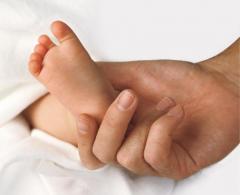 A medical expert claims that men who get involved with their partner’s pregnancy may have their confidence destroyed and injure their potential relationship with the child in the future.
Dr. Jonathan Ives, of the Centre for Biomedical Ethics at the University of Birmingham, is fighting against what he calls the “false, modern rhetoric of equal involvement that has sprung up around parenting.”
Dr. Ives and partner Dr. Heather Draper have been working on a two-year research study titled “The Moral Habitus of Fatherhood” and plan on expressing their views at a pregnancy conference in June. According to the pair’s research, men risk injuring their own opinion of themselves by trying too hard to become involved with their partner’s pregnancy.
“There is a modern, moral ideology of fatherhood that says if you’re not intimately involved in every aspect of your baby’s development, you’re failing,” Ives told the Guardian. He claims that men often try to get involved in an intimate, proactive way only to discover that their role is a very passive one during pregnancy. Often this leads to emotional detachment, he said.
“Having begun the fathering role already feeling a failure may destroy his confidence,” said Ives.
“It can then be very difficult for him to regain faith in himself once the baby is born and move from that passive state to being a proactive father. His role in the family is no longer clear to him. He effectively becomes deskilled as a parent and this can lead to problems bonding with the child.”
Ives’ comments follow a recently reported study that found that fathers are also susceptible to postpartum depression. That study found that over 10 percent of fathers became depressed during the prenatal and early postnatal period, with the number jumping to over 25 percent between three and six months after birth.
Dr. Draper suggested that there were other, more positive ways for fathers to get involved with their partners and children. “There are many different preparations for fatherhood and attending antenatal classes and being present at the birth are not the only, or even necessarily the best, methods,” she said. “Society must be realistic about what men can actually contribute”.
Scotland renews efforts to curtail smoking in pregnant women
May 31, 2010 by Shawn Douglas
Filed under News, Pregnancy
 Health officials in Scotland are renewing their efforts to reduce the rate of smoking in pregnant women, warning of the risk to them and their babies.
Doctors, agencies and government officials in Scotland are working together to get the word out: if you smoke while pregnant, you’re risking more than your own life.
Following on the heels of research by Glasgow and Stirling universities for the NHS that only three out every 100 women quit smoking while pregnant, the British Medical Association and Action on Smoking and Health are working with doctors to promote the United Nation’s World No Tobacco Day.
“Around one in five women smoke during pregnancy and, although this is an improvement on previous years, it reflects the lack of knowledge among Scots about the health risks of smoking, not only to themselves, but to the health of their children,” BMA Scotland’s deputy chairman Dr. Sally Winning told The Herald.
AHS Scotland’s chief executive, Sheila Duffy, explained the No Tobacco Day: “The theme of this year’s World No Tobacco Day is gender and tobacco with an emphasis on marketing to women. The World Health Organisation has produced some excellent posters showing the dangers of smoking and the illnesses it can cause and are calling on countries to ban all tobacco advertising, promotion and sponsorship.”
“Research shows that the tobacco industry is using the cigarette packet more aggressively and more effectively as a marketing tool to recruit smokers as other promotional avenues are closed,” Duffy added.
The BMA and AHS campaigns follow the revelation that Scots are increasingly looking for help with giving up smoking. The NHS estimated that almost 70,000 people tried to quit smoking in Scotland in 2009, an increase of 35 percent over 2008.
“We need to offer more smoking cessation support to adults and parents to help those who wish to stop smoking stay stopped,” Winning told the BBC.
South Korean Internet addicts convicted of abandoning, starving baby
May 28, 2010 by Shawn Douglas
Filed under News
 A South Korean couple was convicted today of abandoning their baby to die while they let their Internet addiction take over their life.
Prosecutors at South Korea’s Suwon District Court ended up with a two-year sentence for father Kim Jae-beom, 41, and a suspended sentence for mother Kim Yun-jeong, 25, who is expecting another baby this August.
The unmarried couple found their malnourished newborn daughter dead last September after returning home from an all-night Internet gaming session. Their three-month-old daughter, who was born prematurely at 6.4 pounds, was found to weigh only 5.5 pounds at the time of her death.
“This constitutes an inhumane crime where the defendants abandoned even the most basic responsibilities as parents, and is unforgivable beyond any excuse or reason,” said Suwon District Court officials in their ruling.
The prosecution stated in an affidavit that the couple was prone to frequently participating in long-term gaming sessions at Internet cafes, while only feeding the baby once a day.
“The defendants’ prematurely born daughter needed constant care, but they did not feed the baby and even beat her, while indulging in online games,” the ruling further stated.
While the original trial was held in March, the defense worked to have the sentencing delayed while a psychological review was made on the mother. Ultimately her sentence was suspended due to her current pregnancy, and she’s able to stay out of jail as long as she complies with a court-ordered plan.
The case has acted as a spotlight on South Korea’s Internet addiction problems. The country features some of the most highly-wired broadband services, with an estimated 21,500 high-speed Internet cafes spread around the nation of 49 million people.
Last October, officials cracked down Internet addiction, putting into place regulations on three of the country’s biggest game operators that require a “shutdown” system that would encourage users to log off after a certain period of time.


