


Your viewing articles about; heart disease
Baby Fae, the 25 year anniversary of a ground breaking procedure
October 26, 2009 by Baby Chums
Filed under Baby Health, News
Dr. Leonard Bailey of Baby Fae fame pictured on the right
It’s a special day for Dr. Leonard Bailey, 66, who gained international fame in 1984 after transplanting a baboon’s heart into an infant girl. Twenty-five years ago today, the eyes of the world were on a baby girl who needed a heart, Baby Fae.
Stephanie “Fae” Beauclair died less than a month after receiving a baboon heart, however, more than 500 young patients since have received heart transplants at Loma Linda University Medical Center.
“The bottom line is Baby Fae’s legacy is a strong one - there have been several thousand babies salvaged now who would not (have made it) otherwise,” said Dr. Leonard Bailey.
“I think she sent word around the world that people should think about newborns, too.”
Cross-species organ transplants are gone due to controversies over potential infections. But the Baby Fae transplant paved the way for the world’s first human-to-human heart transplant in a child a year later.
Bailey said: “The majority of these children were programmed from conception to not be in this world ever more than just birthing and dying. Their lifespan was in days. When you think about it it’s really quite amazing the quite large cadre of kids who have grown up,
“In those days, the advice to parents was to leave the baby here to die or take it home to die,” Bailey recalls.
On the day of her death, the surgeon made a rare public appearance to inform members of the press gathered outside the hospital. Reports said he was nearly breaking with emotion. “Infants with heart disease yet to be born will some day soon have the opportunity to live, thanks to the courage of this infant and her parents,” Time magazine reported him as saying.
Bailey has spent his life working to lengthen the lifespan of infants born with an untimely death sentence. Many stay in contact.
Teresa, Baby Fae’s mother, is working hard to put herself through nursing school in Kansas. She and Bailey will reunite October 31 for the debut of a documentary titled Stephanie’s Heart: The Story of Baby Fae.


 If you're new here, you may want to subscribe to Baby Chums RSS feed.
Thanks for dropping by and enjoy!
Breastfeeding varies between Latte and tea for babies
October 4, 2009 by Baby Chums
Filed under Baby Health, News
Babies who are breast-fed receive a different milk throughout the day. Scientists say it’s the natural equivalent of Latte in the morning and de-caff tea at night.
A report claims that breastfeeding in the morning gives babies a boost because it contains natural stimulants. Night feeding will help babies sleep thanks to soothing chemical compounds.
Mothers who express milk for feeding from a bottle should make sure it is given to baby at the same time it came from the breast or potentially disrupt sleeping patterns.
Researchers from Spain discovered the chemical make-up of breast milk changes throughout a day.
Researcher Cristina Sanchez said ‘You wouldn’t give anyone a coffee at night, and the same is true of milk.
‘It has day-specific ingredients that stimulate-activity in the infant, and other nighttime components that help the baby to rest.
‘It is a mistake for the mother to express the milk at a certain time and then store it and feed it to the baby at a different time.’
A woman’s body adapts the amount it produces of nucleotides - compounds used to regulate a baby’s sleep or promote activity-Breast milk has three different nucleotides - adenosine, guanosine and uridine - and the combination between them decides whether a baby is restless or sleepy or normally active.
The scientists from the University of Extremadura looked at samples of breast milk taken at eight different points of the day from a group of new mothers.
Breast milk expressed in the mornings should be given to babies at the same time of day so it doesn’t disrupt their sleep
The nucleotide concentrations during the night were at their most sleep-inducing but less so during the day.
NHS experts say breastfeeding gives babies all the nutrients they need for the first six months of life.
Research published earlier this year found women who breastfeed are less likely to have high blood pressure, diabetes and high cholesterol, and heart disease.
Other studies have shown breastfeeding helps protect mothers against ovarian and breast cancer, and osteoporosis in later life.
The report was featured in the journal Nutritional Neuroscience.
IVF Twins Have Greater Risk Of Serious Illness Or Early Death
May 22, 2009 by tanya
Filed under Baby Health, News
Twins conceived from IVF have been found in a study to be at greater risk of serious illness or dying within their first three years of live than twins which have been conceived naturally.
The study also found that twins born as a result of fertility treatment stay in hospital on average four days longer after the birth. They also have a two-thirds higher chance that they will be admitted to a neo-natal intensive care unit, and of returning to hospital in their first three years.
Researchers at the universities of Western Australia and Oxford also found that IVF twins were more than twice as likely to die either before or just after they were born. They were unable to provide any explanation for their findings.
The findings which were published in the journal Human Reproduction, recommended that couples are made aware of the risks involved with multiple births, and that they should be advised to consider implanting one embryo at a time into the womb.
Presently, between 20 and 30 percent of couples undergoing fertility treatment conceive twins. This compares to just 1 percent of natural conceptions resulting in twins.
IVF Twins are more likely to be non-identical as more than one embryo has been implanted into the mother.
Clinics are now being advised by the Human Fertilisation and Embryology Authority to transfer one embryo per treatment session.
Births of two or more babies have more risks involved as there is a higher chance that the infants will be born premature or underweight. There is also a higher risk of cerebral palsy, congenital heart disease or vision problems.
Mothers face more health complications as a result of multiple-births, and have a higher chance of heavy bleeding, miscarriage, diabetes or pre-eclampsia.
Researcher Michèle Hansen, from the Telethon Institute for Child Health Research in Perth, commented: “Couples undergoing fertility treatment should be aware that, in addition to the known increased . . . risks associated with a twin birth, ART [assisted reproductive technology] twins are more likely than spontaneously conceived twins to be admitted to . . . intensive care and to be hospitalised in their first three years of life.”
The study investigated hospital records of twins born both naturally and from fertility treatment, both of identical and non-identical twins. They also considered factors such as the mothers age, year of birth and number of time the woman had given birth in the past.
10 Signs That Your Baby Is Ready To Be Weaned…
April 28, 2009 by tanya
Filed under Baby Health, Tips
 Weaning is the process of moving a baby gradually on to solid food. After six months, breastmilk alone doesn’t provide your baby with enough nutrients, in particular iron, so other foods are needed.
The Department of Health used to recommend that babies were started on solids between the ages of four and six months. Then in May 2003, the following statement was issued:
“Exclusive breastfeeding is recommended for the first six months of an infant’s life as it provides all the nutrients a baby needs.
If you do feel that your baby needs to start solids before six months, you may want to have a chat with your health visitor. This is particularly important if you baby was premature.
Be aware that introducing solids too early or increasing the amount too quickly may result in damage to the baby’s digestive system. It may also mean that your baby does not take the amount of milk it requires to obtain his daily requirement of essential nutrients.
Weaning too early has been linked with a higher risk of developing conditions such as asthma, eczema and hay fever. It sometimes also leads to infants being overfed and resulting in obesity, which increases the risk of cancer, diabetes, and heart disease later on in life.
If you do decide to wean your baby onto solids before six months, there are a number of foods that need to be avoided, such as those containing gluten, eggs, cheese, dairy products, fish and shellfish.
The goal is to get your baby to be eating a well balanced diet by their first birthday. At this point, they should be eating most foods, although they will need meals to be chopped up.
Is my baby ready to start eating solids?
Every baby is different, take a look at the following checklist to help you decide whether your baby is ready to start eating solids:
1. Is your baby over four months old?
2. Can your baby swallow food easily? Young babies can only swallow liquids – as they get older, they will drool less and start transferring food from the front of their mouth to the throat.
3. Can they sit upright, either on their own or with help, and support their head and neck well?
4. Have they started to make chewing motions, such as trying to chew their hands more?
5. Are they showing more interest in solid food? This is one of the strongest signs of readiness to wean. They may try to grab food of your plate.
6. Have they doubled their birth weight? This usually happens before or around their sixth month.
7. Are they demanding more frequent milk feeds and showing signs of hunger?
8. Do they seem unsatisfied and still hungry after a full milk feed?
9. Are they sleeping through the night? After a period of sleeping through the night they may start waking up for a feed.
10. Do they get distracted when feeding? Maybe they are stopping and starting feeds to play with objects or to try and chat.
If you answered ‘Yes’ to the majority of the above signs, then you may want to think about starting to wean your baby. You should talk to your health visitor or doctor if you have any concerns about introducing solids to your baby’s diet.
Rapid weight gain in Baby girls may signal future health problems
April 28, 2009 by Baby Chums
Filed under Baby Health, News
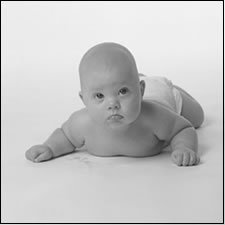 New research suggests that babies who rapidly gain weight during the first months of life are more likely to become overweight or even obese when they get older. Being overweight or obese could put kids at an increased risk of a range of diseases in later life, including type 2 diabetes, heart disease and cancer.
The study of girls concluded that weight gain in the first nine months was critical to how heavy they would be at 10 years old.
Funded by the World Cancer Research Fund, data was collected from 2,715 girls from birth to two months, two to nine months and nine to 19 months.
Faster weight gain during the first nine months was related to a higher body weight, height and overall body mass index scores when the girls were 10. The rate of weight gain between the ages of nine months and 19 months did not have the same effect.
Official statistics from the national child measurement programme suggest that 22 per cent of children in England are overweight or obese by the time they start school, while nearly a third (31 per cent) fall into these categories at age 10 or 11.
The study, in the Journal of Clinical Endocrinology and Metabolism, also found that girls who put on weight too quickly in infancy were more likely to start their periods at a young age, which has been linked to an increased risk of breast cancer.
Previous research has suggested girls who start their periods early are more likely to be overweight as adults.
The study, from researchers at Cambridge and Bristol universities, is the first to have linked early periods to rapid weight gain early in infancy.
The researchers said that it was the speed at which babies of nine months put on weight that was the important factor.
Ken Ong, from Cambridge, said: “The suggestion that weight gain in the first nine months of a girl’s life increases the risk of being overweight and starting her periods early is interesting because in the UK both childhood obesity and the number of girls who start their periods early are rising.
“If we are serious about tackling childhood obesity, we need to understand why children become overweight in the first place and that is why this study is important.”
Breastfeeding Is Not Only Healthy For Babies But Also For Moms
A new study shows that moms can lessen their risk of a heart attack, heart disease, and a stroke when they breastfeed their baby.
A new study done by the University of Pittsburgh has shown that women can reduce their risk of a heart attack, heart disease, and a stroke by 10% when they breastfeed for at least a year.
The study also showed that it can reduce the risk of diabetes and high cholesterol by 20%. It also showed that even just breastfeeding for a month could help lessen your risks.
The results of this study are believed to be caused from breastfeeding reducing the amount of fat storage in the body, which in return makes the woman healthy. More studying has to be done for more conclusive reasons.
It has been known for awhile that breastfeeding helps to make babies healthy. It can lessen the possibility of asthma, obesity, and infections in the baby. Also it has been proven that breastfeeding helps women recover from pregnancy faster and lessens the chance that a woman may get ovarian cancer later in life.
Dr Eleanor Bimla Schwarz, who was involved in the study, said, “We have known for years that breastfeeding is important for babies’ health - we now know that it is important for mothers’ health as well. The longer a mother nurses her baby, the better for both of them.”
Breastfeeding your Baby is beneficial
April 23, 2009 by Baby Chums
Filed under Baby Health, News
New research suggests that breastfeeding mothers may be lowering their own risk of heart disease, a heart attack or stroke. The risk of benefits to a baby is long.
A study from the US found that women who breastfed their babies for over a year were 10% less likely to develop these conditions than those who didn’t breastfed.
Breastfeeding for just a month might also cut the risk of diabetes, high cholesterol and high blood pressure.
The study is in addition to a growing body of evidence suggesting breastfeeding has health benefits for both mother and baby.
Research has found that breastfeeding reduces a woman’s risk of ovarian and breast cancer and osteoporosis in later life.
Benefits to babies include protecting against obesity, diabetes, asthma and infections of the ear, stomach and chest.
The latest US study, by the University of Pittsburgh, focused on nearly 140,000 post-menopausal women.
On average, it had been 35 years since the women had last breastfed - suggesting the beneficial impact lasts for decades.
As well as cutting the risk of heart problems, breastfeeding for more than a year cut the risk of high blood pressure by 12%, and diabetes and high cholesterol by around 20%.
It has been suggested that breastfeeding may reduce cardiovascular risk by reducing fat stores in the body.
However, the researchers believe the effect is more complex, with the release of hormones stimulated by breastfeeding also playing a role.
Researcher Dr Eleanor Bimla Schwarz said: “We have known for years that breastfeeding is important for babies’ health; we now know that it is important for mothers’ health as well.
“Breastfeeding is an important part of the way women’s bodies recover from pregnancy.
“When this process is interrupted women are more likely to have a number of health problems (including heart attacks and strokes).
“The longer a mother nurses her baby, the better for both of them.”
In the UK, the Department of Health recommends exclusive breastfeeding for six months.
June Davison, a cardiac nurse at the British Heart Foundation, said: “Breastfeeding has long been thought to be beneficial to baby and mother.
“This research suggests that it might have also have heart health benefits for mum too.
“However, it only showed an association between breast feeding and these health benefits. We will need further research to understand why this is the case.”
Baby Bottles chemical BPA to remain in UK
March 14, 2009 by Baby Chums
Filed under Baby Health, News, Product News
Baby bottles manufacturers in the US have finally caved into consumer pressure and are to remove a controversial chemical from their products, Bisphenol A (BPA).
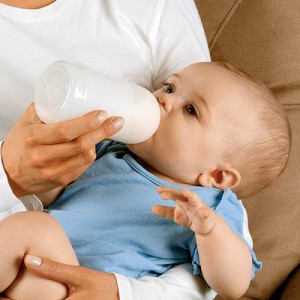
Canada formally declared BPA a hazardous substance in 2008 and announced plans to ban the importation or sale of bottles containing the chemical.
In the UK however manufacturers will continue selling bottles containing BPA.
Food Standards Agency representatives insist that BPA in UK plastic products is, “Well below the levels considered harmful”.
Growing public concern has arisen about the potential effects of BPA seeping into a babies feed when the bottles are heated. Exeter University researchers found that adults with high levels of BPA in their system were more prone to diabetes and heart disease.
Dr Iain Lang, lead of the study, said: “There is not enough to provide us with the evidence to say there is definitely a link, there is definitely something going on.”
The advice currently given to parents is not to pour boiling liquid directly into bottles, not to microwave them or use scratched or worn ones.
Dr Iain Lang continued saying: “But in addition to some of the previous work that has been done looking at younger children and looking at animals this does increase the likelihood that there are problems associated with BPA.”
Dangers for children of Women who are obese
February 11, 2009 by Baby Chums
Filed under Baby Health, News, Pregnancy
A new study has shown that women who are obese are more likely to have children with birth defects than slim mothers. Defects including the child’s heart and spina bifida. An estimated one in six pregnant women in Britain is now obese or overweight.
The Government was asked by experts to fund anti-obesity campaigns, targeting all women within an age range and for doctors to be educated about potential complications obese and overweight expectant mothers can expect.
Newcastle University researchers discovered that babies born to obese mothers were significantly more likely to suffer from abnormalities. More than twice as likely to be born with spina bifida, in which the spinal cord is incomplete, causing disability. 20 per cent more likely to be born with a cleft palate and 30 per cent more likely to have heart defects.
Dr Emily Gelson, from Imperial College, London said: “Increasing numbers of deaths are occurring in women with unknown heart disease but with known risk factors. The presence of these risk factors must be highlighted during pregnancy, promoting the timely diagnosis of unsuspected (heart) disease in pregnant women.”
“Only by raising the profession’s awareness of the possibility of heart disease in pregnant women will this alarming rise in the maternal mortality rate be arrested, and preferably, reversed.” She co-authored the report.


