


The Latest Baby Gadgets for 2009
April 5, 2009 by tanya
Filed under Baby Videos, News, Product News
TheBump.com’s Carley Roney showed Maggie Rodriguez some great hi-tech gadgets designed to make a new mother’s life easier.
There are some crazy inventions here - including a machine which tells you why your baby is crying, and an application for your iPod to keep track of how many minutes you are feeding your baby and on which side!
Also, look out for the very funky looking spoons which will make feeding a lot cleaner and easier - although the presenter does end up squirting food everywhere!
For mothers who have to carry around endless supplies of pacifiers (or dummies as us Brits prefer to call them) - you will love the pacifer sterilizer which you can pop into your handbag.

 Welcome back! If you love Baby Chums, please subscribe to our RSS feed.
Thanks for dropping by and enjoy!
Dead Baby Found In Plastic Bag
Police in British Columbia, Vancouver, are appealing for information after the dead body of a baby was found wrapped up in plastic bag.
The discovery was made by a resident on Thursday morning in a residential alley between two homes.
Police Constable Jana McGuinness said “We are interviewing a couple of witnesses. This incident is only confirmed as a suspicious death at this time until the autopsy is completed.”
An autopsy was scheduled to be carried out on Friday - details of the child’s ethnicity and gender have so far not been released. Police are asking the mother or any witnesses to come forward. It is unclear whether the baby was from the area.
New mother Christina Short, who lives with her 11-week-old daughter locally told reporters “It saddened me, because I have a newborn and I couldn’t imagine what it would be like if anything happened to her.
“I don’t know what happened to this mother or these people to make them feel like they had no options.
“I just really feel for the baby. No one ever tells you they cry for 24 hours straight.”
Baby Formula Found To Contain Same Chemicals As Rocket Fuel
April 3, 2009 by tanya
Filed under Baby Health, News
Parents may be surprised to hear that the same chemical found in fireworks and rockets has been discovered in baby formula brands.
Perchlorate is an oxidizer in solid fuels, it is found in explosives such as fireworks, flares and rockets.
The study, carried out by scientists at the Centers for Disease Control and Prevention, found that 15 unnamed makes of powdered baby formula were contaminated with perchlorate. None of the products mentioned the chemical on their labels.
The chemical has been linked to thyroid disease, and may interfere with fetal and child brain development. The thyroid acts as a thermostat in the body, when it is damaged, it is prevented from taking iodine sufficiently. This then hinders it’s effectiveness to carry out a variety of essential functions.
Lactose-free formulas, or soy-based products were found to contain lower levels of Perchlorate than in those comprised from cow’s milk.
The two most contaminated brands were used by almost 90 percent of the US baby formula market in 2000.
Perchlorate has been found in the drinking water of 28 states in America, and there have been calls to monitor the chemical more effectively.
For the study, published last month in the Journal of Exposure Science and Environmental Epidemiology, perchlorate-free water was used to mix up the formulas.
Parents have been advised by the Environmental Protection Agency to make sure that their babies eat a diet containing iodine, which will help to protect them from the chemical. Mixing with water not contaminated with perchlorate will also help to lower the amount of the chemical the baby will consume.
As the study did not measure the amount of perchlorate in babies, it is unknown how much of the chemical is absorbed by infants.
American Idol Finalist, LaKisha Jones, Expecting Baby No. 2
April 2, 2009 by tanya
Filed under Celebrity Baby News
LaKisha Jones, American Idol finalist, is expecting her second child with husband Larry Davis.
Jones (29) already has a daughter (6) called Brionne from a previous relationship. It will be her first child with her husband, who is a financial adviser.
The singer came fourth in season six, and will be releasing her first album, “so Glad I’m me“, on May 19. Previously, she had featured on Broadway in ‘The Colour Purple’ and had been the understudy for Chaka Khan.
The baby is due in the spring, not too long after her debut album.
“When I think about all the goodness in my life right now, every day I think ‘I’m so glad I’m me!’ ” Jones told People magazine.
LaKisha Jones singing, “This Ain’t a Love Song”
Bigger Babies More At Risk Of Child Obesity
April 1, 2009 by tanya
Filed under Baby Health, News
Researchers are claiming that the amount of weight a baby gains in their first six months may be linked with child obesity.
Elsie Taveras, MD, PhD, from Harvard Medical School, stated “The mounting evidence suggests that infancy may be a critical period during which to prevent childhood obesity and its related consequences.”
The study, published this week in Pediatrics, studied the weight and length of infants at birth, 6 months, and 3 years.
It was found that where there was rapid weight gain in the first six months, there was a higher chance that the child would be obese at age 3. Of the 559 children studied, 9 per cent were obese by 3-years-old.
The study concluded that children in the top percentiles at birth up to 6 months had a 40 per cent risk of being obese later on. This compared to a 1 per cent risk for infants in the bottom percentiles.
Researcher Matthew Gillman, MD, said “At first it may seem implausible that weight gain over just a few months early in infancy could have long-term health consequences, but it makes sense because so much of human development takes place during that period — and even before birth,”
Mums In Russia Forced To Swap Baby Boys
Two toddlers in Russia have been exchanged after a hospital mix-up was discovered in the city of Mtsensk.
Authorities have ordered that the Chechen and Russian mothers of the two-year-old boys swap their sons after DNA tests proved their true identities.
The mistake was discovered when Anna Androsova found that her baby’s ID tag had Zarema Taisumova as the mother’s name.
When Ms Androsova met the Chechen mother, she knew he was her son immediately. Ms Taisumova denied claims of any physical resemblance, and refused to swap the infants.
After DNA tests substantiated her claims, initially, Ms Androsova had wanted to keep the boy which she had looked after for two years. She later changed her mind and decided to take the matter to court.
Ms. Taisumova appeared on Russian television and said she was still in shock, and would continue to love the other boy.
Both children have had their names changed, and are reported to be having trouble adapting to their new surroundings and family. Other siblings are also finding it hard accepting the changes - with one elder brother saying that he preferred his ‘old’ brother more.
Lack of staff has been given as the reason for the mix-up by the hospital. The nurse responsible has since been sacked.
Late-Preterm Babies Have Higher Chance Of Problems At Pre-School
March 30, 2009 by tanya
Filed under Baby Health, News
Studies have shown that babies born three to six weeks before their due dates have a higher risk of learning disabilities or developmental delays during preschool.
Although the risk is small, there was a significant increase in risk between full-term and late-preterm babies.
Researchers have told parents not to be alarmed by the results, as overall, the risk is small.
Currently, 3 percent of full-term babies will suffer from learning problems. This compared to 4 percent of late-preterm babies - a 36 percent increase.
It had been thought that babies born after 35 weeks of gestation were clear of any developmental problems.
Dr. Steven Benjamin Morse who led the study said ““The biggest take-home point is that the late-preterm baby is not exactly the same as the term baby,”
“They go home from the hospital in two to three days, and they look great, and they act like full-term babies,”
“But now we’ve found that they do have some increased risk of problems when they enter school. We were surprised.”
Preterm births are currently increasing in the States, with around 70 percent of preterm births occurring within the time frame studied.
Dr. Alan Fleischman, medical director of the March of Dimes said more had to be done to avoid preterm births. “We need to make sure the obstetricians are not suggesting early deliveries and Caesarean sections to be done at their convenience, and that the mothers are not requesting early deliveries,”
Hand-Foot-Mouth Disease Kills Five Babies In China
March 29, 2009 by tanya
Filed under Baby Health, News
Five babies in China have died from Hand-foot-mouth disease (HFMD) this week.
The babies, all from Heze City in east China’s Shandong Province, included four boys and a one-year-old girl.
Over this year, 1,734 cases of HFMD have been reported in Heze City, with 440 cases being reported on Friday alone.
Experts have arrived in the city to help deal with the outbreak of the disease.
HFMD usually begins with a slight fever, which later develops into blisters and ulcers around the mouth, and rashes on the hands and feet.
Often, intestinal viruses, such as EV71 are linked with the condition.
Currently, there is no vaccine. Children who contract the disease may later develop meningitis, encephalitis, or paralysis.
Baby’s Sleep Position Doesn’t Make A Baby’s Head Flat
March 28, 2009 by tanya
Filed under Baby Health, News
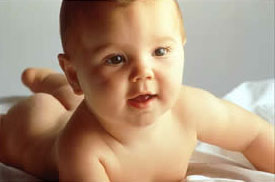 American researchers say that a baby’s sleep position may not make much difference in making their head’s flat.
Risk factors for deformational plagiocephaly (DP), a condition that causes severe asymmetrical head shape, were analysed.
Since the 1990s, parents have been advised to let babies sleep on their backs to reduce the risk of cot death, sudden infant death syndrome (SIDS).
The study was carried out due to the increasing numbers of DP over the last 10-15 years, which now affects up to one in six babies.
Research was carried out at Hasbro Children’s Hospital and Children’s Hospital Boston. They concluded that the position a child sleeps in does not increase the amount of head flattening.
Prof. Albert Oh said “We found a trend toward less flattening in infants who slept prone [face downward], or in positions that were alternated,”
He went on to comment in the Hasbro Children’s news release. “Interestingly, however, while supine [on the back] positioning has been a well-established risk factor for the development of plagiocephaly, we were not able to demonstrate a logical correlation to indicate more severe flattening from the supine position.”
Interestingly, they did find that a lower gestational age did increase the chances of severe head flattening. They also found that boys had a higher chance of developing the condition, as did multiple-birth babies.
Oh said “In our study, infants with DP who were the product of a multiple-birth pregnancy were disproportionately higher than in the general population and greater than in previous studies,”
Abortion Adverts May Soon Be Allowed On British TV
For the first time ever, abortion clinics could soon be allowed to advertise on British TV and radio.
The move comes amid the growing numbers of teen pregnancies seen in the UK.
Adverts for pregnancy advisory services may be allowed to show during prime-time slots in the evenings on major channels.
MP Nadine Dorries who recently succeeded in lowering the time limit for abortions from 24 weeks to 20 said in her blog that the idea was “just plain sick”.
“I am quite sure that any adverts will depict smiling pretty nurses, gleaming reception areas and leafy car parks,” she added
‘They will not in any way show the fear, anguish, isolation, or subsequent depression.”
The proposal has come after consultations by advertising watchdogs, which may also be lifting restrictions on advertising campaigns promoting the use of condoms.


