


Scientists discover genetic link between low birth weight and diabetes

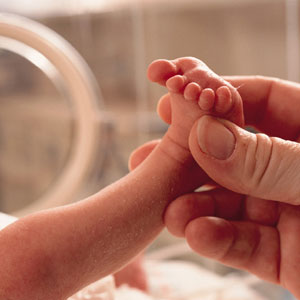 Scientists have discovered that there is a genetic link between low birth weights in babies and the onset of Type 2 diabetes later in life.
The collaborative effort of scientists from Britain, Finland, the Netherlands and the United States has yielded important research which could change the way diabetes is dealt with in the future.
The team of scientists analyzed the results of 19 medical studies on pregnancy and birth, spanning over 38,000 European participants. The researchers found two genetic variants that were strongly linked to a baby’s birth weight, and one of those variants was also linked to how susceptible a person is to developing Type 2 diabetes.
In an interview with the Scotsman, Jim Wilson, a researcher at the University of Edinburgh said: “Finding two gene variants that decrease birth-weight is the first exciting step to unraveling the well known associations between birth-weight and killer diseases in later life. It is particularly interesting that one of these variants is also a risk factor for Type 2 diabetes.
“These genes will begin to reveal the biology behind how low birth weight increases the risk of adult-onset diabetes, heart disease and high blood pressure,” he added.
The second variant linked to diabetes is the gene called ADCY5. According to the researchers’ data, people who inherit two copies of this gene in two specific genetic regions have a 25 percent increased chance of developing diabetes later in adulthood.
Professor Mark McCarthy, lead diabetes researcher at the University of Oxford, found that the genetic variants were somewhat common in Europeans.
“[In] European populations we think that about 10 percent of the population have at least all four birth-weight-lowering variants,” he told ABC news.
However, McCarthy cautioned that the genetics variants alone are not responsible for low birth weights, but environmental factors must still be considered.
“I think these are all factors that go into the mix. These are not genetic effects that will say irrespective of everything else that you will end up with a small baby.”
Dr. Rachel Freathy, a researcher at the Peninsula Medical School in Exeter, agreed, telling the Press Association, “It is now important for us to establish how much of the association is due to our genes and how much is due to the environment because this will inform how we target efforts to prevent the disease.”
The research is published in the journal Nature Genetics.
![[Post to Twitter]](../../../wp-content/plugins/tweet-this/icons/tt-twitter-micro3.png)
![[Post to Delicious]](../../../wp-content/plugins/tweet-this/icons/tt-delicious-micro3.png)
![[Post to Digg]](../../../wp-content/plugins/tweet-this/icons/tt-digg-micro3.png)
![[Post to Reddit]](../../../wp-content/plugins/tweet-this/icons/tt-reddit-micro3.png)
![[Post to StumbleUpon]](../../../wp-content/plugins/tweet-this/icons/tt-su-micro3.png)


 Welcome back! If you love Baby Chums, please subscribe to our RSS feed.
Thanks for dropping by and enjoy!
Read More related stories...
- Early weight gain during pregnancy puts mother at risk of gestational diabetes
Excessive early weight gain during pregnancy puts a mother at...
- Vegetable consumption during pregnancy lowers baby’s risk of diabetes in future
Vegetable consumption by expectant mothers may lower the risk of...
- BPA found in cans and plastic containers linked to cardiovascular disease
BPA, a chemical found in food cans and many plastic...


 Kelsey Grammer Expecting Fifth Child with New Girlfriend
 Halle Berry Voted Hottest Celebrity Mom
 Peter Andre Planning on Releasing Children’s Book Series
 Singer Alanis Morissette Announces She is Pregnant
 Race Car Driver Jeff Gordon Welcomes a Son
 Robbie Williams and Ayda Field Expecting a Baby?
 Lily Allen Keeps it Casual as She Performs Last Gig Before Baby
 Rod Stewart and Penny Lancaster Expecting Another Child
 Coco Arquette May Make Big Screen Debut in Scream 4
 Amy Poehler Welcomes Second Son


Comments
Tell us what you're thinking...
and oh, if you want a pic to show with your comment, go get a gravatar!