


Baby’s Sleep Position Doesn’t Make A Baby’s Head Flat

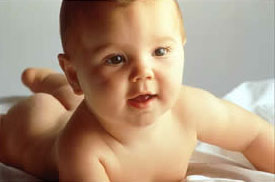 American researchers say that a baby’s sleep position may not make much difference in making their head’s flat.
Risk factors for deformational plagiocephaly (DP), a condition that causes severe asymmetrical head shape, were analysed.
Since the 1990s, parents have been advised to let babies sleep on their backs to reduce the risk of cot death, sudden infant death syndrome (SIDS).
The study was carried out due to the increasing numbers of DP over the last 10-15 years, which now affects up to one in six babies.
Research was carried out at Hasbro Children’s Hospital and Children’s Hospital Boston. They concluded that the position a child sleeps in does not increase the amount of head flattening.
Prof. Albert Oh said “We found a trend toward less flattening in infants who slept prone [face downward], or in positions that were alternated,”
He went on to comment in the Hasbro Children’s news release. “Interestingly, however, while supine [on the back] positioning has been a well-established risk factor for the development of plagiocephaly, we were not able to demonstrate a logical correlation to indicate more severe flattening from the supine position.”
Interestingly, they did find that a lower gestational age did increase the chances of severe head flattening. They also found that boys had a higher chance of developing the condition, as did multiple-birth babies.
Oh said “In our study, infants with DP who were the product of a multiple-birth pregnancy were disproportionately higher than in the general population and greater than in previous studies,”


 If you're new here, you may want to subscribe to Baby Chums RSS feed.
Thanks for dropping by and enjoy!
Read More related stories...
- Parents’ sleep assumptions affect how a baby sleeps
Researchers at Tel-Aviv University theorize that babies sleep either well...
- Lying still after artificial insemination treatment increases success rate
Lying still in the supine position after undergoing artificial insemination...
- Late-Preterm Babies Have Higher Chance Of Problems At Pre-School
Studies have shown that babies born three to six weeks...


 Heidi Klum Introduces Lou Sulola to the World


Comments
Tell us what you're thinking...
and oh, if you want a pic to show with your comment, go get a gravatar!